
Los Costos Ocultos de Contar Efectivo Manualmente
Contar monedas manualmente puede parecer simple, pero agota el tiempo y los recursos de cualquier negocio que maneje monedas en grandes volúmenes. En AccuBANKER,...
Read article
Laundromats can process large volumes of coins and bills, making counting and reconciliation a recurring part of the operation. Collections may include coins from washers and dryers, bills from change machines, and cash from vending or other self-service equipment.
The right equipment depends on how your laundromat accepts payments, how much cash you process, and how often collections are counted. Coin counters and sorters can speed up coin processing and preparation, while bill counters make it easier to count and verify paper currency before deposits.
For higher-volume or multi-location operations, choosing equipment that matches your collection volume can reduce manual counting and create a more consistent cash-handling process.


Shop by Industry
Quarters from every washer and dryer, bills from the change machine, and cash from wash-and-fold orders. The right equipment turns collection day from hours of hand counting into a routine anyone on your team can run.

Once cash is collected, there is still work to do. Coins and bills need to be counted, sorted, reconciled, and prepared for reuse or deposit. The right process can make that routine faster and easier to manage.
Cash doesn’t stop moving once it leaves the machine. An efficient collection process helps operators count what came in, prepare what needs to go back into circulation, and reconcile what is ready for deposit.
Collection day sets the tone for the week. When coin is counted by hand, the total depends on who counted and how tired they were. A repeatable process with the right equipment gives you numbers you can trust and a record you can compare week to week.
Keep each machine's coin separate when you can. Counting by machine shows which washers and dryers earn the most, and it flags the one that suddenly drops, which is often the first sign of a jam or a coin mechanism problem.
A coin counter gives you the total first. If your store uses tokens, a universal coin and token counter like the AB610 handles both, so you are not hand counting the tokens separately.
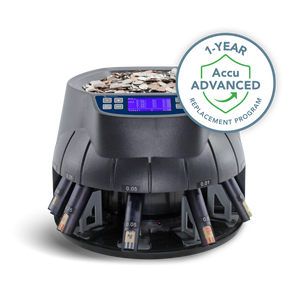
The AB510 sorts and wraps coin into five trays. Roll what goes to the bank and set aside rolls to refill the change machine, so you stop buying change you already have.
Change machine bill acceptors take bills all day with no one watching. Counting them on a bank grade counter with built-in security features, like the AB5800, gives you a verified total and a second check before the deposit.
From the blog
Contar monedas manualmente puede parecer simple, pero agota el tiempo y los recursos de cualquier negocio que maneje monedas en grandes volúmenes. En AccuBANKER,...
Read articleAdministrar el efectivo de manera eficiente y precisa es una operación crítica para cualquier negocio, pero ¿está cansado de pasar horas contando efectivo manualmente...
Read articleA medida que las empresas luchan por crecer, sus propietarios, directores ejecutivos y gerentes generales se preguntan acerca de las soluciones que aumentarán sus...
Read articleRunning more than one location? Our team will help you spec the right setup for each store.
The best coin counter for a laundromat depends on your coin volume and whether you need to count, sort, or prepare coins for wrapping. For mixed U.S. coins, the AccuBANKER AB510 counts and sorts by denomination and includes coin tubes to help prepare coins for wrapping. Laundromats processing larger volumes may benefit from a higher-capacity coin counter such as the AB610.
A laundromat that collects mixed denominations may benefit from a coin sorter that separates coins while counting them. If your operation primarily needs to count large volumes of a single denomination, such as quarters, a dedicated coin counter may be more efficient. The right choice depends on the coins your machines accept and how you process collections.
A commercial coin counter can count large volumes of quarters much faster than counting them manually. Laundromat owners can process coins after each collection, record the total, and separate the amount that will be returned to change machines from the amount being prepared for deposit.
Some commercial coin counters can count tokens, but compatibility depends on the token's size, thickness, and the specifications of the counter. If your laundromat uses tokens, confirm that your specific token is compatible with the coin counter before purchasing or processing a collection.
A bill counter can quickly count paper currency collected from a laundromat change machine. For laundromats processing larger volumes of bills, a commercial bill counter such as the AccuBANKER AB5800 can reduce manual counting and help operators prepare cash for reconciliation and deposit.
Multi-location laundromats can make cash collections more efficient by using a consistent process for collecting, counting, sorting, reconciling, and preparing cash at each location. Using the same cash-handling equipment and procedures across stores can also make collection totals easier to track and compare.
Coins collected from washers and dryers can be counted and sorted before some are returned to the change machine and the remainder is prepared for deposit. Keeping an accurate count helps laundromat operators know how much was collected, how much coin is being put back into circulation, and how much cash is ready for deposit.
¿Tienes una cuenta?
Inicia sesión para finalizar tus compras con mayor rapidez.

